

BUILDING PROJECTS FROM AROUND THE WORLD SHOW HOW SHARING AND INCLUSIVITY IS VITAL FOR THE GREEN TRANSITION. WORDS By Francesca Perry
In a climate crisis, designing for environmental sustainability is no longer optional. The built environment has a key role to play in accelerating a greener future, but simply focusing on low-carbon, energy-efficient architecture and the physical aspects of place isn’t enough. True sustainability relies on people: their buy-in and habits for one, but also their wellbeing and equity. Sustainable living must be inclusive and accessible; not just for the wealthy few, but for all.
Socially sustainable places are those in which diverse communities thrive. They facilitate sharing of equitable resources and services, collaboration and collective action, and self-sufficiency – all ways of living that help achieve a greener society. Certain projects, from homes to urban farms to schools, help demonstrate the ways in which environmentally conscious places can also support people in inclusive ways. Here are a few from around the world.

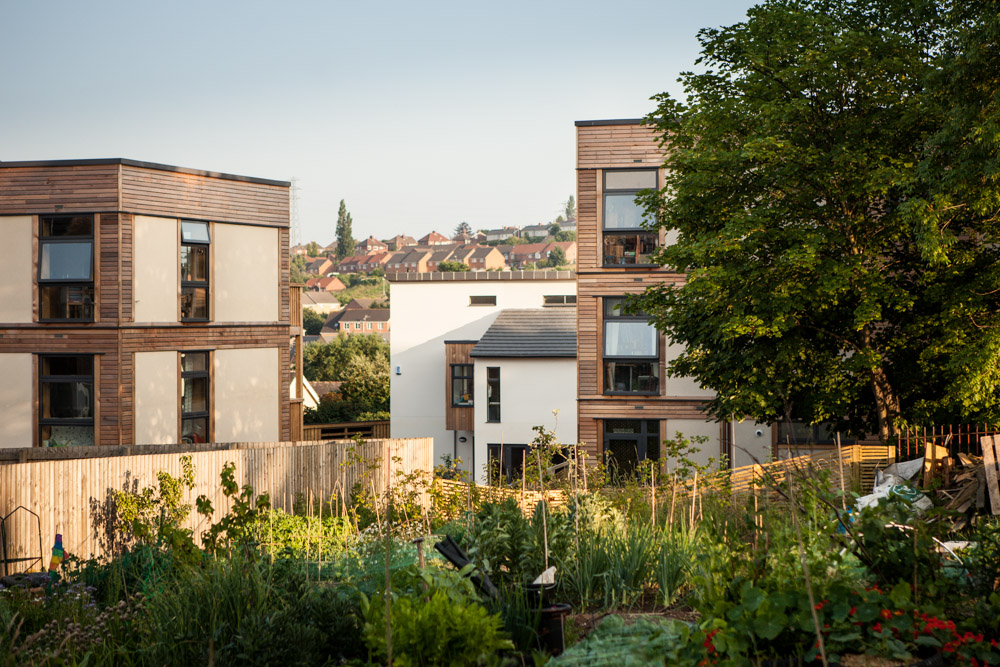
LILAC (Low Impact Living Affordable Community), in the northern English city of Leeds, is a community-led co-housing project of 20 low-carbon households. Completed in 2013, it includes shared amenities such as a kitchen, dining room, workshop, food growing allotments, gardens and a play area. These promote communal activities that help support sustainable lifestyles: the community shares cars, equipment and tools, as well as meals, and grows food in the allotments to eat.
The houses are made from timber insulated with strawbale, and topped with solar panels. What’s more, the homes and land are managed by the residents through a Mutual Home Ownership Society, a financial model that ensures permanent affordability and thus community sustainability.

Another system which aims to ensure permanent affordability is a Community Land Trust (CLT). London’s first CLT, St Clement’s in Mile End (JTP Architects, 2017), directly links the sale price of each home to median incomes in the local area, rather than their market value, meaning that they remain affordable for local people. The project is owned and run by a democratic, non-profit community organisation.
Environmentally, the project champions adaptive reuse – the main building was once a hospital and has been sustainably repurposed into housing. There are also new green spaces and a new pedestrian and cycle route.
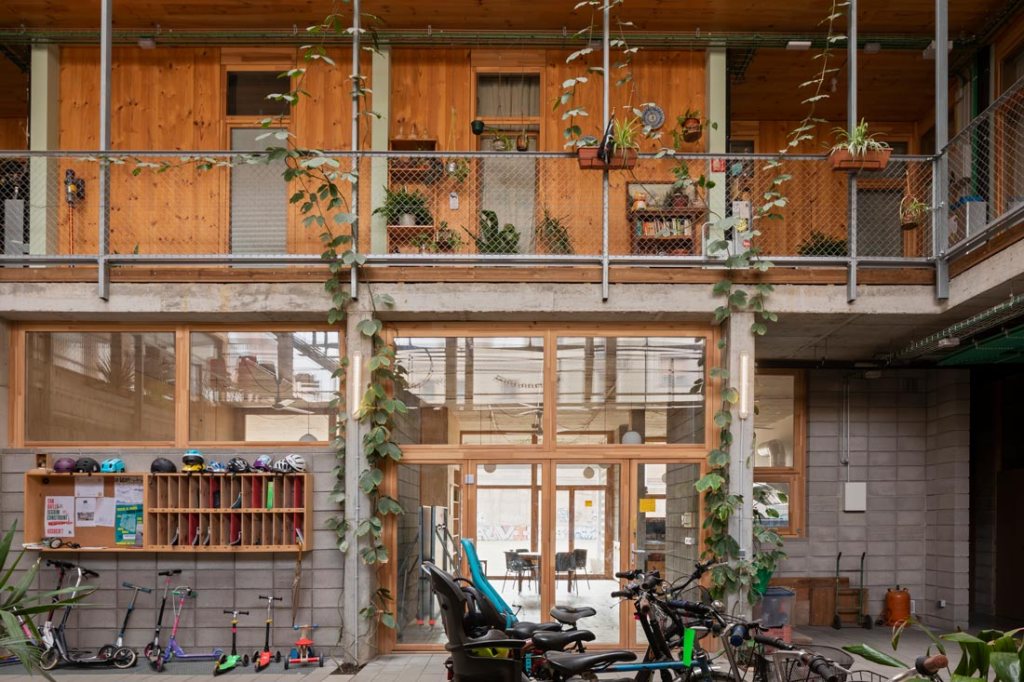
In Barcelona, the La Borda housing development – designed by Lacol in 2018 – is run by a housing cooperative, meaning the resident community participated in designing the complex and collectively manages it, sharing resources.
The project was developed by its users as a way to avoid poor quality, speculative housing. It includes 28 homes alongside shared community spaces, including a central courtyard and a kitchen-dining area. The building structure is made from cross laminated timber – a renewable, carbon-sequestering material; there are also passive ventilation strategies, as well as solar panels supplying electricity to communal areas.

Mixed-use developments can bring together a diversity of activities and people. When done well, projects both facilitate community building and improve accessibility to vital services. In Singapore, the Kampung Admiralty project by WOHA (2017) is a kind of city in itself, serving multiple needs while maximising land use.
There is a public community plaza in the lower section, a medical centre in the middle section, and a verdant community park with public housing for retirees in the upper section. “Buddy benches” are located at shared entrances to apartments to facilitate social interaction and combat loneliness, a particular risk for older people. The park supports biodiversity, improves air quality and reduces the heat island effect; it also encourages residents of all ages to come together, and even tend community farms.

La Ferme du Rail (The Railway Farm) in Paris is a pioneering project that harnesses urban agriculture as a way to build both environmental and social sustainability. Designed by Grand Huit and Melanie Drevet Paysagiste in 2019, the farm creates jobs and produces healthy food. It also has a restaurant where the food grown on site is served, and where discussions about sustainability in the city can be held.
But the complex also offers emergency social housing, social reintegration housing, and affordable student housing. This creates an integrated, mixed-use project and also ensures the residents can connect directly with sustainable food practices. The low-energy buildings are mainly made of wood, with the additional use of straw bales. Circular materials are also embraced, including recycled textiles for insulation, reclaimed bathroom tiles, and reused pavement slabs.

In India, Avasara Academy (Case Design, 2019) is a large residential school for disadvantaged girls near Pune which uses low-tech climate-responsive design such as bamboo screens, along with solar panels, to work towards net-zero energy use. As a school, it helps even the most economically disadvantaged young women become leaders in their community. Students also actively engage in community building projects outside of school.
Back in London, Nourish Hub by rcka (2022) is a community centre for learning about, cooking and eating healthy, sustainable food and eliminating food waste. It teaches skills and brings people together, empowering them to lead more healthy and sustainable lifestyles together. Not only is the project a light-touch, adaptive reuse of an old post office, thus requiring minimal interventions and new materials, but it also involved the community in its design and development, so local people could take ownership of it.

Socially sustainable places are first and foremost affordable and accessible; if everyone, regardless of circumstance, has a good-quality place to live, work, and learn, then we can hope to build stronger and more equitable communities, who can all participate in achieving environmental sustainability goals.
Projects should also be engaged and responsive: if design responds to real local need, rather than speculation or profit, people will care for it, they will thrive in it, and they will want to stay.
Healthy places are vital to sustaining communities, and well-connected and well-served places not only reduce the need for polluting travel, but help people lead more fulfilling lives and build community.
Finally, shared space and shared amenities are important to fostering community bonds, tackling isolation, improving quality of life. And sharing spaces and resources is vital to minimising our impact on the planet.
This is an edited version of a talk I was invited to give at the Realdania conference ‘Transition for Everyone’ in September 2022. Thank you, Realdania, for having me to speak.

 thinking city //